Clara Schmidt · 6 October 2026
Cornish Folklore Artists Team Up with Ecologists to Track Elm Grove Recovery Through Community Sketchbooks
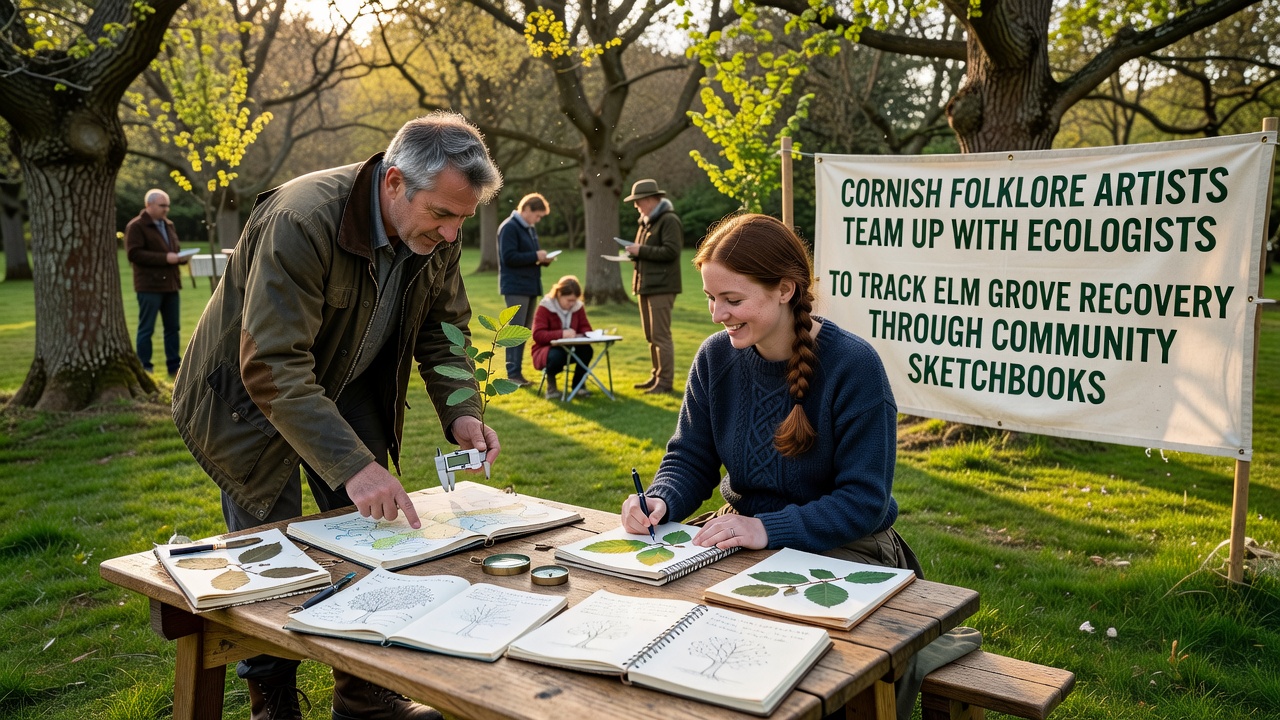
Communities across Cornwall have developed a distinctive approach to monitoring elm recovery that blends artistic documentation with ecological fieldwork, and observers note how this method draws directly from local folklore traditions that have long associated elm groves with seasonal cycles and coastal resilience. Researchers at several institutions have tracked Dutch elm disease impacts since the 1970s, yet recent efforts focus on documenting regrowth through shared sketchbooks that record leaf patterns, bark textures, and associated wildlife sightings.
Historical Context of Elm Groves in Cornwall
Elm populations in coastal Cornwall faced repeated setbacks from disease outbreaks, and historical records show that local communities once used these trees for boat building and hedgerow markers. Data from the Forestry Commission indicates that surviving elm clones now appear in scattered groves along the north coast, where salt spray and wind exposure create unique growth conditions. Ecologists have mapped these sites using satellite imagery combined with ground surveys, revealing that recovery rates vary significantly between sheltered valleys and exposed headlands.
Folklore collections compiled by the Cornish Folklore Society describe elms as markers of ancient boundaries and seasonal gatherings, and these narratives provide context for why artists choose specific drawing techniques that emphasize root systems and canopy layers. One study from the University of Exeter documented how community memory of past tree losses influences current planting choices, with participants selecting disease-resistant varieties that still match traditional landscape profiles.
The Artist-Ecologist Partnership Model
Local artists trained in observational drawing now work alongside field ecologists to fill sketchbooks that serve as both artistic records and data logs, and each page includes annotations for date, location, weather conditions, and species observations. These sketchbooks undergo review by both art collectives and scientific panels, which cross-reference drawings against photographic evidence and soil samples collected at the same sites. Participants report that the process encourages repeated visits to the same groves, building longitudinal datasets that span multiple seasons.
Workshops held in village halls introduce standardized notation systems so that contributors from different backgrounds produce comparable entries, while still allowing room for individual artistic styles that capture light and texture details sometimes missed by standard photography. The partnership has expanded to include schools, where students contribute sketches that ecologists later digitize for database integration.
Community Sketchbooks as Monitoring Tools
Each sketchbook follows a template that records metrics such as branch density, presence of beetle galleries, and signs of new sucker growth, and these details feed into broader surveys conducted by regional conservation groups. Analysts have compared sketchbook entries from 2024 against 2025 records to identify acceleration points in recovery, noting that certain folklore-inspired motifs like spiral root drawings correlate with areas showing stronger regrowth. Digital archives now store high-resolution scans, allowing remote researchers to access the material without disturbing physical sites.
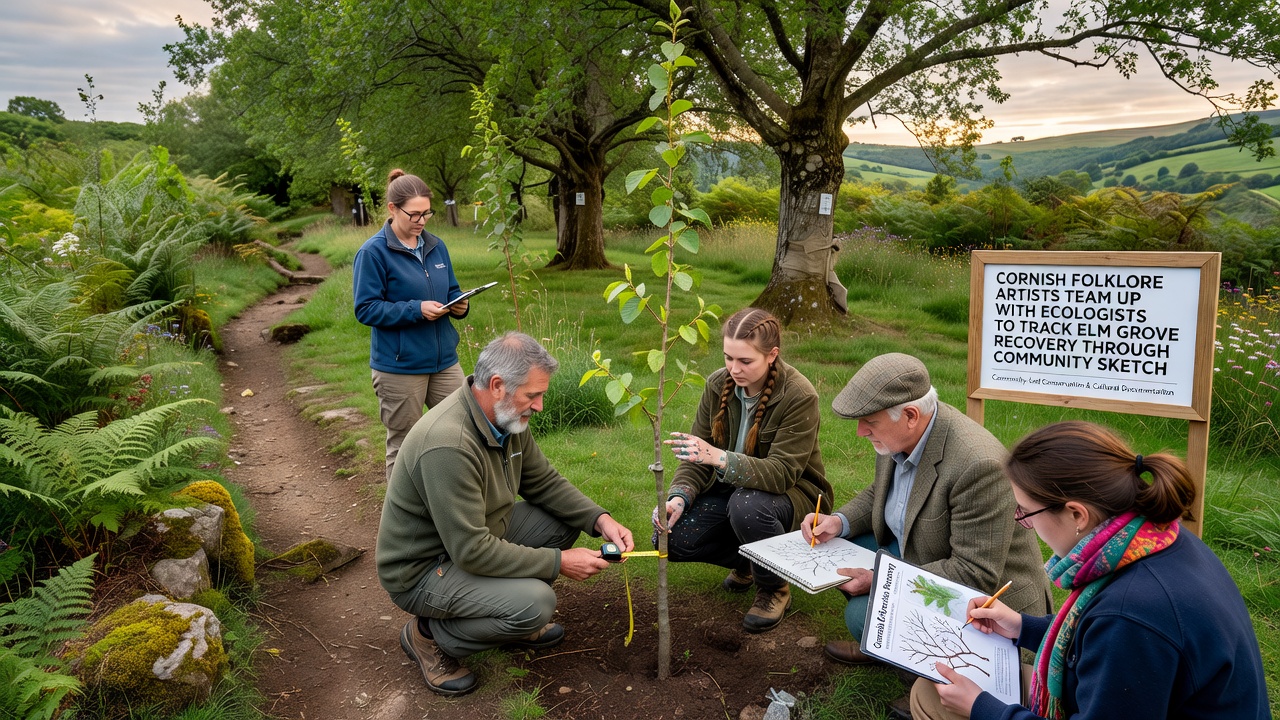
Training sessions emphasize accurate scale drawing so measurements taken from sketches align with caliper readings taken in the field, and this dual verification reduces discrepancies that sometimes arise in citizen science projects. Groups meet quarterly to review accumulated volumes, discussing patterns that emerge across multiple sketchbooks from different groves.
Integration with October 2026 Events
Plans for October 2026 include a coordinated recording week where artists and ecologists visit designated groves simultaneously, and organizers expect participation from over 200 contributors across ten coastal parishes. This timing aligns with traditional harvest festivals that once marked elm-related customs, providing cultural continuity while generating fresh datasets on autumn leaf retention and seed production. Organizers coordinate with weather services to schedule sessions during stable conditions that favor detailed outdoor work.
Results from these sessions feed into annual reports shared with bodies such as the European Environment Agency, which maintains comparative datasets on tree health across member regions. The approach has drawn interest from researchers in British Columbia studying similar artist-scientist collaborations in coastal forests, where sketch methods help track recovery from mountain pine beetle damage.
Broader Implications for Coastal Conservation
Sketchbook data has already informed adjustments to planting densities in trial plots, with ecologists noting that areas highlighted in multiple artistic records for strong understory development received supplemental protection measures. The method also supports public engagement, as completed volumes circulate through libraries and community centers, allowing residents to see direct connections between their contributions and ongoing monitoring efforts. Figures released by regional biodiversity partnerships show increased volunteer retention in projects that incorporate artistic components compared with purely quantitative surveys.
Conclusion
The collaboration between Cornish folklore artists and ecologists demonstrates how traditional knowledge systems and contemporary monitoring techniques can operate within the same documentation framework. Sketchbooks created through this partnership continue to accumulate records that support both scientific analysis and cultural preservation, with the October 2026 recording week expected to expand the available dataset further. This model offers one approach to tracking elm grove recovery while maintaining community connection to the landscapes involved.