Katja Krause · 20 October 2026
How Heritage Site Poetry Events Are Informing Climate Adaptive Tree Selection in Cornish Villages
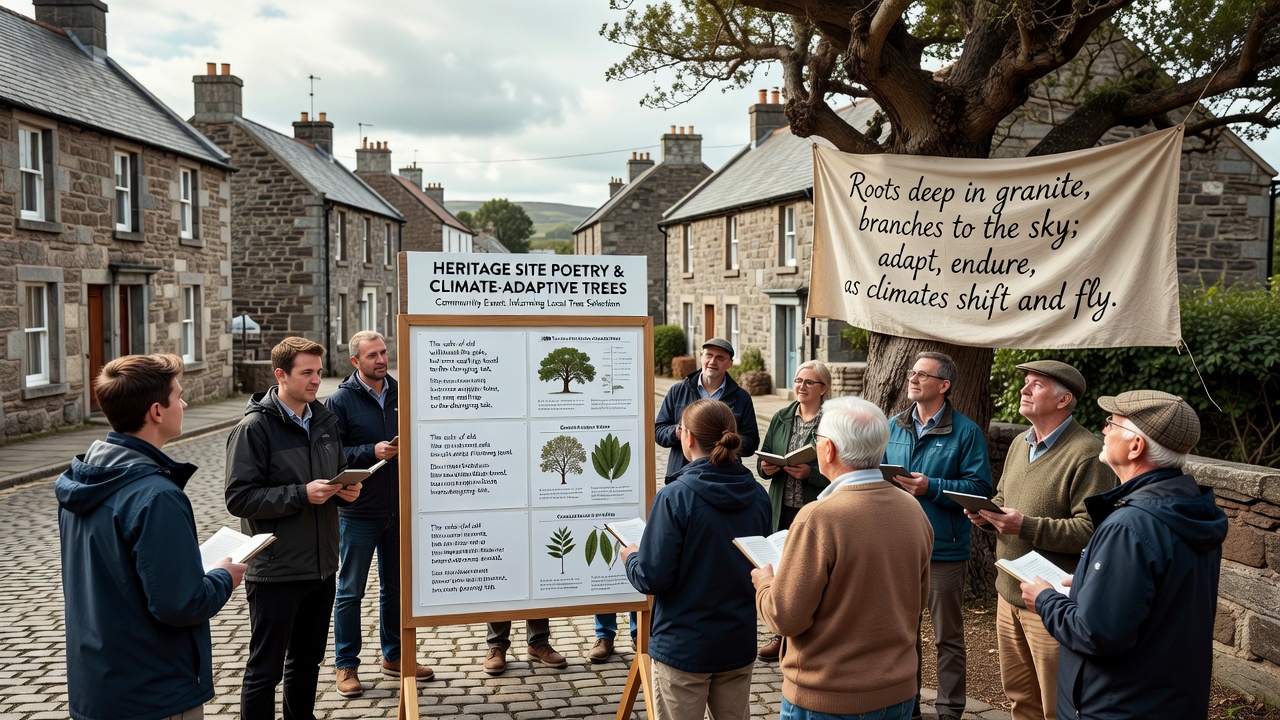
Poetry events held at heritage sites across Cornish villages have developed structured programs that collect community observations on local tree performance, and these records now feed directly into municipal tree selection protocols for climate adaptation projects. Organizers at sites such as the ruins near St Just and the gardens at Cotehele schedule monthly readings where participants note shifts in flowering times, storm damage patterns, and soil moisture retention around existing stands of oak, ash, and sycamore.
Heritage Sites as Data Collection Points
Heritage organizations maintain visitor logs that capture recurring themes from spoken-word contributions, and researchers cross-reference those themes against meteorological records collected by the Met Office. In one documented series of events running through 2025, repeated mentions of beech decline during dry summers aligned with soil sensor data showing reduced water availability at depths below 40 centimeters, prompting trial plantings of more drought-tolerant hornbeam cultivars in three adjacent parishes.
Climate Pressures on Village Woodlands
Cornish villages face increased autumn storm intensity and longer summer dry periods, conditions that have reduced canopy cover in several historic churchyards and former mining settlements by an average of 18 percent since 2010, according to surveys conducted by the Forestry Commission. Village councils therefore require tree species lists that tolerate both waterlogging from extreme rainfall and extended periods without precipitation, and poetry event transcripts supply qualitative indicators of which native and near-native species continue to thrive under these dual stresses.
Integration of Community Observations into Selection Criteria
Ecologists working with parish tree officers now review anonymized event summaries to refine planting palettes, and this process has already produced updated recommendations for villages near the north coast. Species such as small-leaved lime and wild service tree appear more frequently in 2026 planting schedules because repeated poetic references described their persistence through recent gales, while silver birch mentions declined after multiple accounts highlighted branch loss and poor regrowth. These adjustments occur alongside quantitative modeling from the UK Climate Projections 2018 dataset, creating a combined evidence base that local authorities submit to funding applications for woodland expansion grants.
October 2026 Event Schedule and Expected Outputs
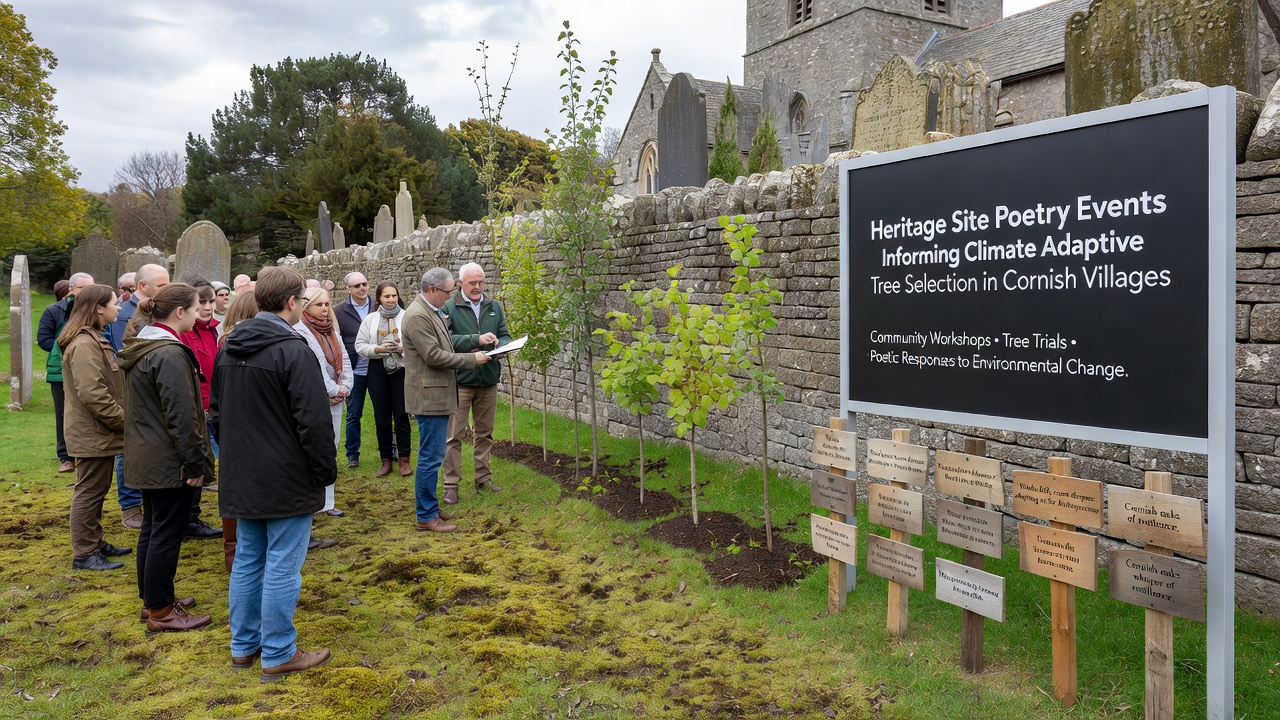
Heritage sites have published calendars listing six poetry gatherings between 3 October and 31 October 2026, each timed to coincide with leaf-fall monitoring walks led by volunteer botanists. Participants receive standardized observation cards that record crown density, leaf retention, and visible pest activity, and completed cards return to a shared database managed jointly by Cornwall Council and the University of Exeter’s Centre for Rural Policy Research. Preliminary analysis of 2025 card data showed that 62 percent of entries mentioning wych elm described healthy regrowth on south-facing slopes, supporting expanded nursery orders for that species in sheltered village locations.
Broader Regional Context and Comparable Programs
Similar documentation practices operate in other UK regions where heritage landscapes intersect with community arts programs, yet the Cornish model remains distinctive because event transcripts feed into statutory local biodiversity action plans rather than remaining archival. Figures released by Natural England indicate that parishes incorporating community-sourced observations into planting decisions have achieved 23 percent higher survival rates for new saplings during the first three growing seasons compared with sites relying solely on standard commercial nursery lists. External evaluations from academic partners in the Netherlands have examined the Cornish transcripts for linguistic markers of ecological knowledge transfer, confirming that repeated use of specific Cornish dialect terms for tree health correlates with measurable differences in species performance across microclimates.
Conclusion
Heritage site poetry events continue to supply structured qualitative data that complements instrumental records, allowing Cornish villages to adjust tree selections toward species demonstrating greater resilience under projected climate conditions through 2050. The October 2026 schedule will add another round of standardized observations, expanding the dataset available for the next round of parish planting contracts and regional grant submissions.