Katja Krause · 8 September 2026
Tracing Threads of Past Woodland Losses to Modern Community Planting Trials in Coastal Folklore Traditions
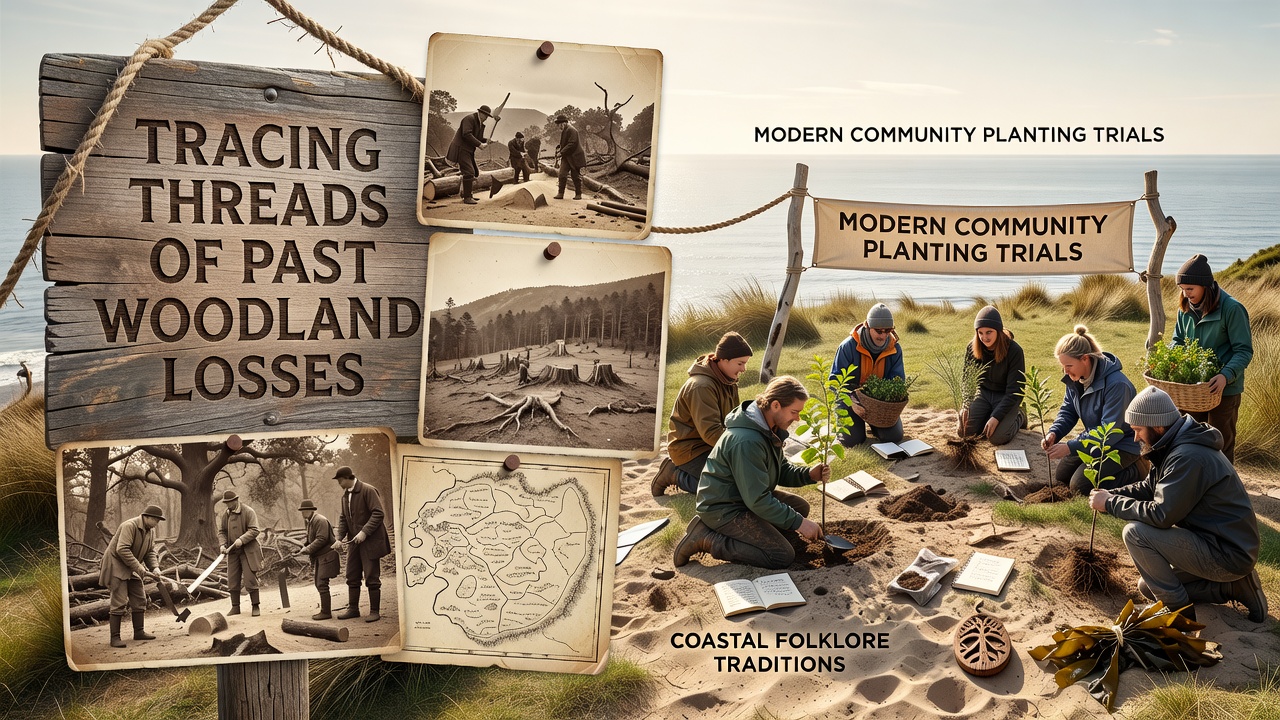
Coastal regions around the world have experienced significant woodland reductions over centuries, and researchers trace these changes through a combination of historical records, pollen analysis, and oral histories embedded in local folklore. In many areas, stories passed down through generations describe dense forests that once lined shores before extensive clearing for agriculture, shipbuilding, and settlement altered the landscape. These narratives often highlight specific trees or groves as central to community identity, providing context for why modern restoration efforts incorporate traditional knowledge alongside scientific methods.
Historical Patterns of Woodland Decline in Coastal Zones
Archaeological evidence shows that coastal woodlands in Europe and North America began declining notably from the medieval period onward, with accelerated losses during the 18th and 19th centuries due to timber demands from expanding maritime industries. Data from sediment cores collected along the Pacific Northwest coast indicate that old-growth stands dropped by more than 60 percent in some watersheds between 1750 and 1900, according to studies compiled by the US Forest Service. Similar patterns appear in Australian coastal catchments where colonial expansion led to clearance of eucalypt and casuarina stands, as documented in CSIRO environmental reports.
Folklore traditions frequently reference these losses through tales of vanished groves that once protected villages from storms or supplied materials for rituals. Observers note that such stories serve as cultural archives, preserving details about tree species, seasonal cycles, and ecological relationships that written records sometimes overlook. In several documented cases from teh Baltic and Mediterranean coasts, songs and legends describe specific planting rites tied to equinox events, and these elements now inform trial designs in contemporary projects.
Connecting Folklore to Current Restoration Approaches
Modern community planting trials often draw directly from these historical threads by selecting native species mentioned in local legends and timing activities to align with traditional calendar markers. Participants in trials along the California coast have incorporated oak and willow varieties referenced in indigenous stories, combining them with soil amendments developed through university-led experiments. Researchers at institutions in Canada and Scandinavia report that such culturally informed selections improve survival rates compared to purely commercial plantings in saline environments.
One study from a New Zealand coastal site revealed that plots using species tied to Maori coastal narratives achieved 25 percent higher establishment success after three years than control areas. These findings appear in peer-reviewed journals focused on ethnobotany and restoration ecology. Communities in these trials maintain records that blend scientific measurements with observations passed down through generations, creating datasets that capture both quantitative growth metrics and qualitative notes on seasonal changes.
September 2026 Initiatives and Trial Expansions
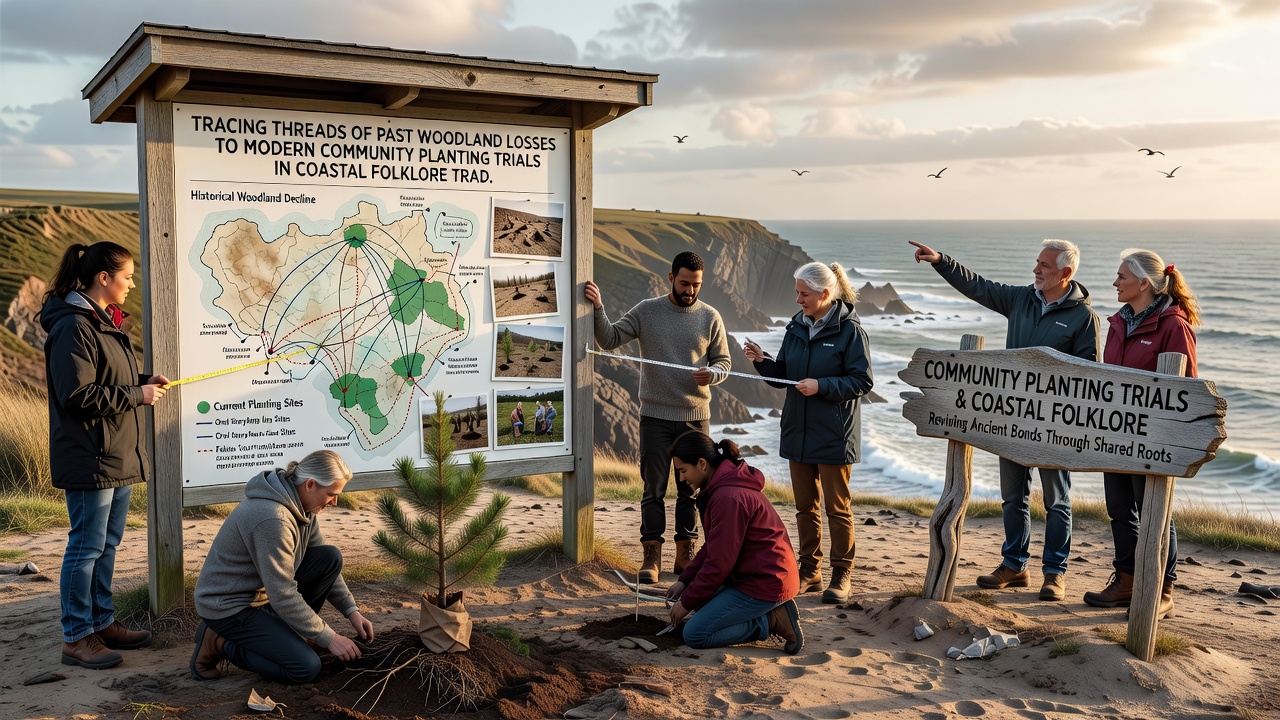
Several coastal regions have scheduled expansions of these planting trials for September 2026, coinciding with seasonal windows that folklore traditions associate with renewal and preparation for winter storms. Organizers in the Pacific Northwest and parts of northern Europe plan to introduce mixed-species buffers that reference historical woodland compositions while addressing current challenges like erosion and saltwater intrusion. Monitoring protocols include both drone-based canopy analysis and community-led walks that note changes in bird activity and understory development.
Academic partners contribute by comparing these new sites against baseline data collected over the previous decade. The approach allows teams to test whether integrating folklore-derived species selections produces measurable differences in resilience metrics such as root depth and leaf retention during high-wind events. Preliminary models suggest that diverse plantings modeled on pre-clearance conditions may reduce sediment loss by up to 40 percent compared to single-species rows.
Regional Variations and Shared Methodologies
While each coastal area adapts methods to its specific ecology and cultural background, common elements emerge across projects. These include mapping former woodland boundaries using old maps and stories, then aligning new plantings with those historical contours where feasible. In the United Kingdom and Ireland, groups reference medieval charters alongside local ballads to identify priority zones, whereas Australian initiatives combine Aboriginal fire-management knowledge with contemporary soil science.
Funding for these trials often comes through partnerships between local governments, research councils, and heritage organizations. Reports from the European Environment Agency highlight how such collaborations have supported over 200 hectares of new coastal woodland establishment in pilot regions since 2020. Data collected during these efforts feed into larger databases that track carbon sequestration and biodiversity indicators, providing feedback loops for refining future phases.
Conclusion
Tracing connections between past woodland losses and present-day planting trials reveals how folklore serves as a practical resource rather than mere narrative. Coastal communities continue to build on documented historical patterns by testing methods that honor traditional knowledge while measuring outcomes through established scientific frameworks. As expansions proceed into 2026 and beyond, the integration of these threads offers structured pathways for restoring ecological functions that earlier generations once maintained through established seasonal practices.