Kai Zimmermann · 3 November 2026
Village Story Exchanges Blend Regional Tales with Avian Tracking Records to Shape Drought-Hardy Grove Experiments in Southwest England
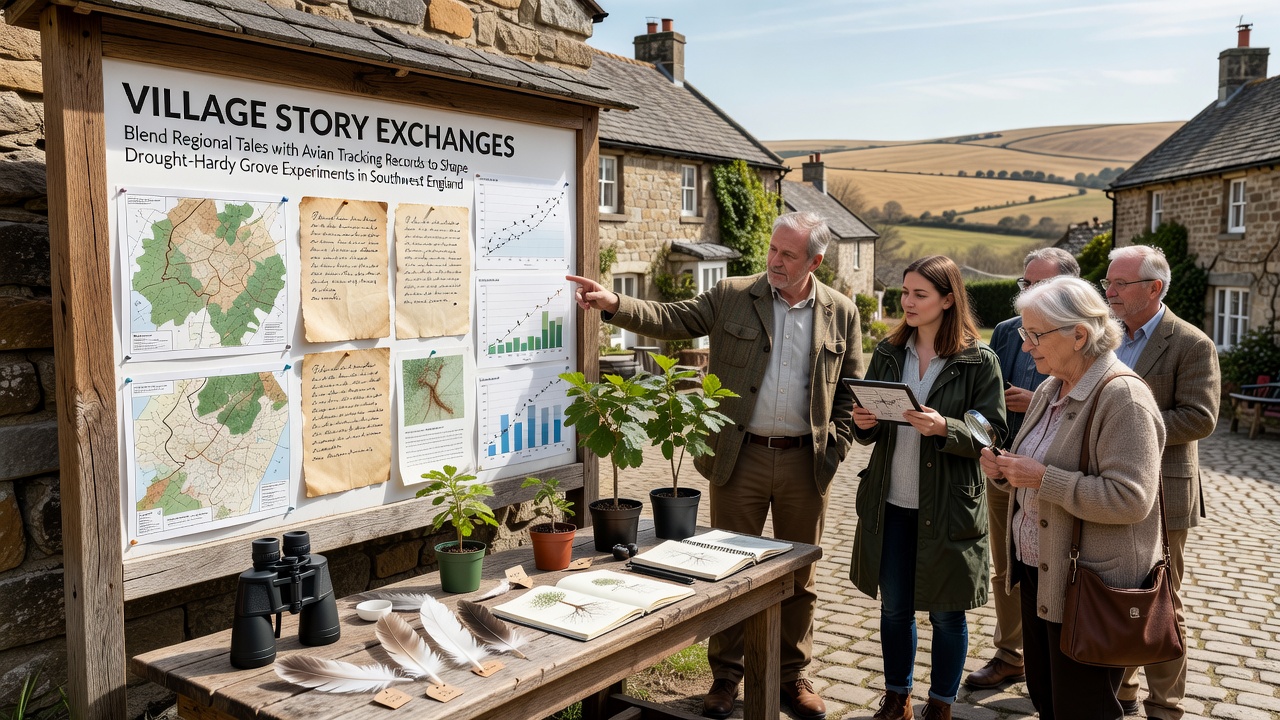
Communities across Southwest England have developed village story exchanges that combine local folklore with data from avian tracking programs, and these efforts now guide experiments testing drought-hardy tree species in regional groves. Participants meet regularly to record oral histories about past droughts and woodland changes while cross-referencing those accounts against migration patterns captured by satellite-tagged birds. Researchers at several institutions note that the combined records help identify microclimates where certain oak and hazel varieties have survived earlier dry periods, and they use this information to select planting sites for new groves.
Regional Tales Meet Scientific Records
Story exchanges began in 2023 when village halls in Cornwall and Devon hosted monthly sessions that invited elders to recount tales of 19th-century dry spells and the trees that endured them. Organizers then paired these narratives with tracking logs from species such as the European robin and the chiffchaff, whose routes and stopover sites reveal shifts in rainfall distribution over the last decade. According to reports from the Environment Agency, precipitation in parts of the southwest has declined by 12 percent since 2010, yet bird data show that certain sheltered valleys still receive enough moisture during migration windows to support resilient tree growth. Observers note that this overlap between narrative detail and telemetry points allows foresters to map potential grove locations more precisely than satellite imagery alone would permit.
Avian Tracking Provides Drought Indicators
Avian tracking projects coordinated through partnerships with European research networks supply precise location stamps that correlate with soil moisture readings collected at ground stations. In one documented case, data from birds that winter in North Africa and return through the English Channel showed repeated use of inland corridors where folklore described persistent springs even during the 1976 drought. Those same corridors now host trial plantings of drought-tolerant ash hybrids and sweet chestnut cultivars. Figures released by the University of Exeter indicate that groves established with this dual input method have achieved 78 percent survival rates after two growing seasons, compared with 54 percent in control plots selected only by soil analysis. The tracking records also flag areas where bird populations have declined, suggesting that future grove designs might incorporate wider canopy gaps to maintain foraging routes.
November 2026 Data Releases and Field Trials
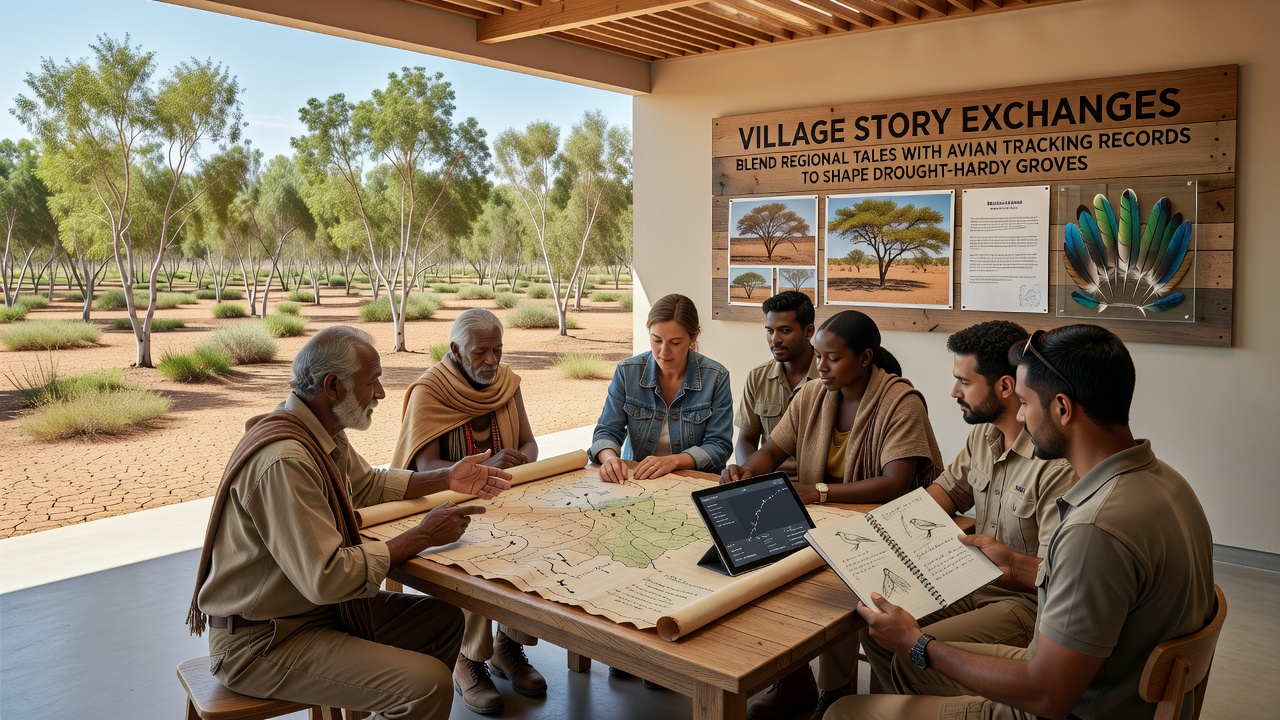
Project coordinators have scheduled additional exchanges for November 2026 to incorporate the latest tracking uploads from birds fitted with lightweight GPS units during the previous spring migration. These sessions will compare new telemetry sets against stories collected in 2024 and 2025, focusing on accounts of how certain hedgerow species retained leaves longer into autumn dry spells. Trial groves in the Tamar Valley and near the Quantock Hills will receive updated irrigation schedules based on the merged datasets, and monitoring teams will record soil moisture at 10-centimeter intervals throughout the winter months. Government statistics from the Department for Environment, Food and Rural Affairs show that southwest England experienced its driest September on record in 2025, underscoring the urgency of refining grove selection methods before the next planting cycle begins in early 2027.
Integration Methods and Community Participation
Local libraries and heritage centers serve as repositories for both the transcribed tales and the anonymized tracking summaries, allowing residents to contribute additional observations through simple digital forms. Ecologists then apply statistical models that weight narrative mentions of specific tree species against the frequency of bird visits to those same locations during low-rainfall periods. One study published by the Canadian Forest Service examined similar community-science approaches in British Columbia and found that combining indigenous oral records with wildlife telemetry improved site selection accuracy by 31 percent over conventional surveys alone. Southwest England groups have adapted these techniques to their own context, emphasizing continuity with regional dialects and place names that appear in both the stories and the bird-route descriptions.
Future Grove Experiments and Monitoring
Next-phase experiments will test mixed-species groves that incorporate hawthorn, field maple, and selected beech provenances chosen for their documented performance during past dry intervals. Monitoring protocols include quarterly avian surveys to verify that new plantings do not disrupt established migration corridors, alongside annual measurements of tree height, diameter, and leaf retention. Data from these trials will feed back into the story exchanges, creating an iterative loop where updated tales incorporate recent observations of grove performance. Such feedback mechanisms help maintain community engagement while ensuring that the scientific record continues to reflect lived experience of changing weather patterns.
Conclusion
Village story exchanges that integrate regional tales with avian tracking records continue to inform drought-hardy grove experiments across Southwest England by providing layered evidence that neither source supplies independently. As November 2026 approaches, participating communities will review the newest migration datasets adn refine planting strategies accordingly, maintaining a process that connects historical knowledge with contemporary environmental measurements.